01 · The problem
Every new feature needed illustrations: empty states, onboarding, alerts, promos. We were paying a freelancer around $5,000 for a set. Briefing was slow, iteration was slow, and every new case meant another invoice.
← All workCase 02 · Money Fellows
Head of Product Design · Solo, with AI tools · Started November 2025


01 · The problem
Every new feature needed illustrations: empty states, onboarding, alerts, promos. We were paying a freelancer around $5,000 for a set. Briefing was slow, iteration was slow, and every new case meant another invoice.
02 · The insight
In November 2025, image models could make one good illustration, but not eighty that belong together. The real problem was consistency, not generation, so I treated the prompt like a design spec rather than a wish.
03 · The approach
I tested Gemini and ChatGPT against the same brief, comparing how well each held one style across different subjects. It took many rounds, because the tools were far less capable then than they are today.
I turned the visual language into one master prompt. Projection, line weight, light direction, palette and background stay fixed for every generation; only the subject changes.
Each approved render went into Adobe Illustrator to be traced and cleaned up, so every illustration scales, recolors and exports like a real asset.
I added illustrations to the library one by one, against real product needs (payments, security, identity, notifications, rewards), until it covered 80 cases.
04 · The art direction
True isometric on 30° axes. Every object sits on the same grid, so any two illustrations can share a screen.
A single-weight dark outline with rounded joins, and interior detail drawn lighter. It survives the trace cleanly and holds at small sizes.
One light source, top-left. Flat, hard, near-black shadows cast to the lower right ground each object without gradients.
Flat fills with a single darker step on side faces. No gradients or textures means clean vectors, light files and easy recoloring.
A warm off-white base, peach and orange, money green, periwinkle for screens and red for errors. Color carries meaning: green for success, orange for attention, red for stop.
Small bursts, sparkles and signal arcs show a state change (ringing, notifying, paying) without any animation.
Egyptian pound notes, Egyptian national ID cards and the Money Fellows card itself, so the library speaks to our users rather than a generic stock audience.
Locks, IDs and location pins come in neutral, success, warning and error versions, ready to drop into real UI flows.
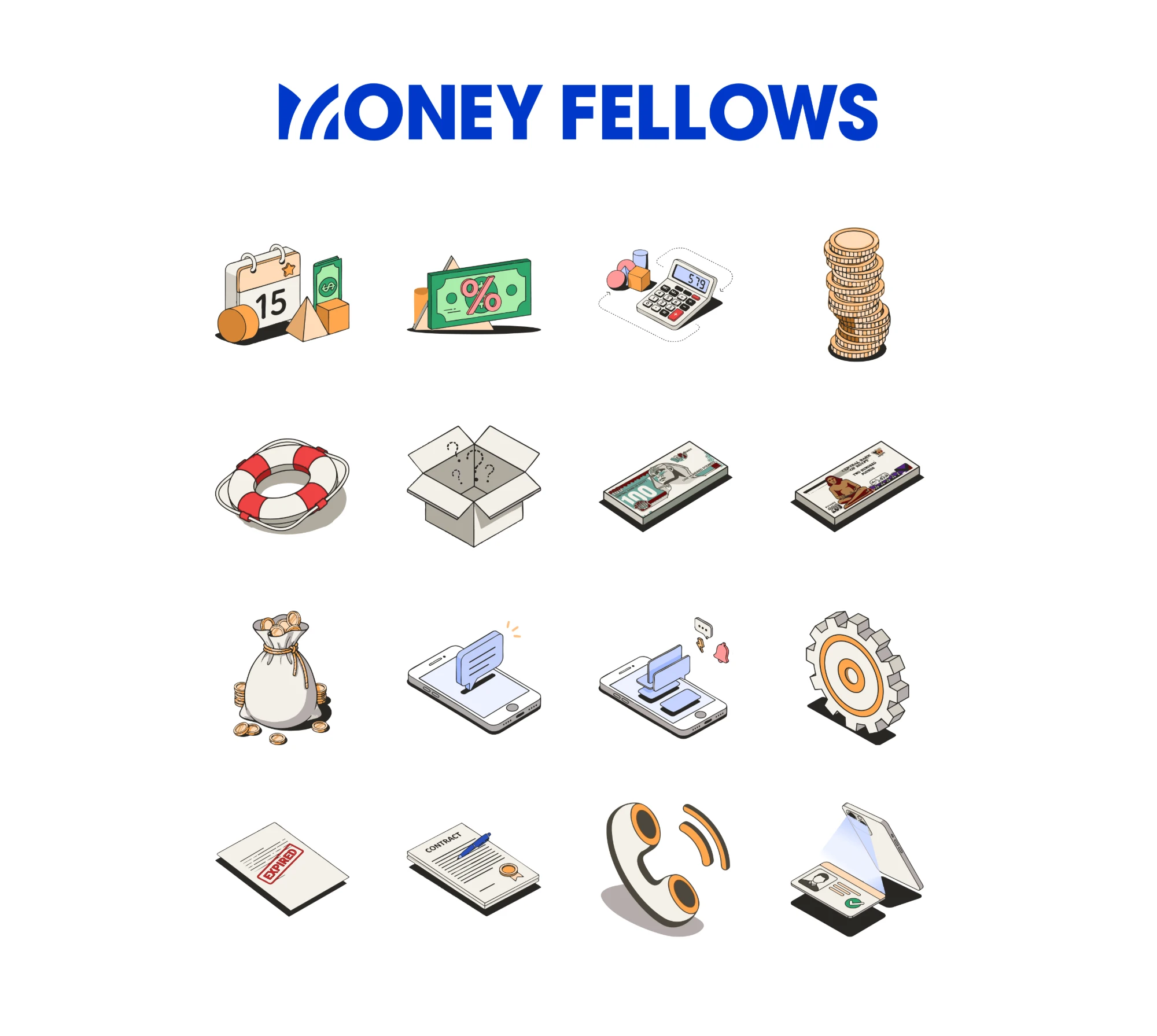
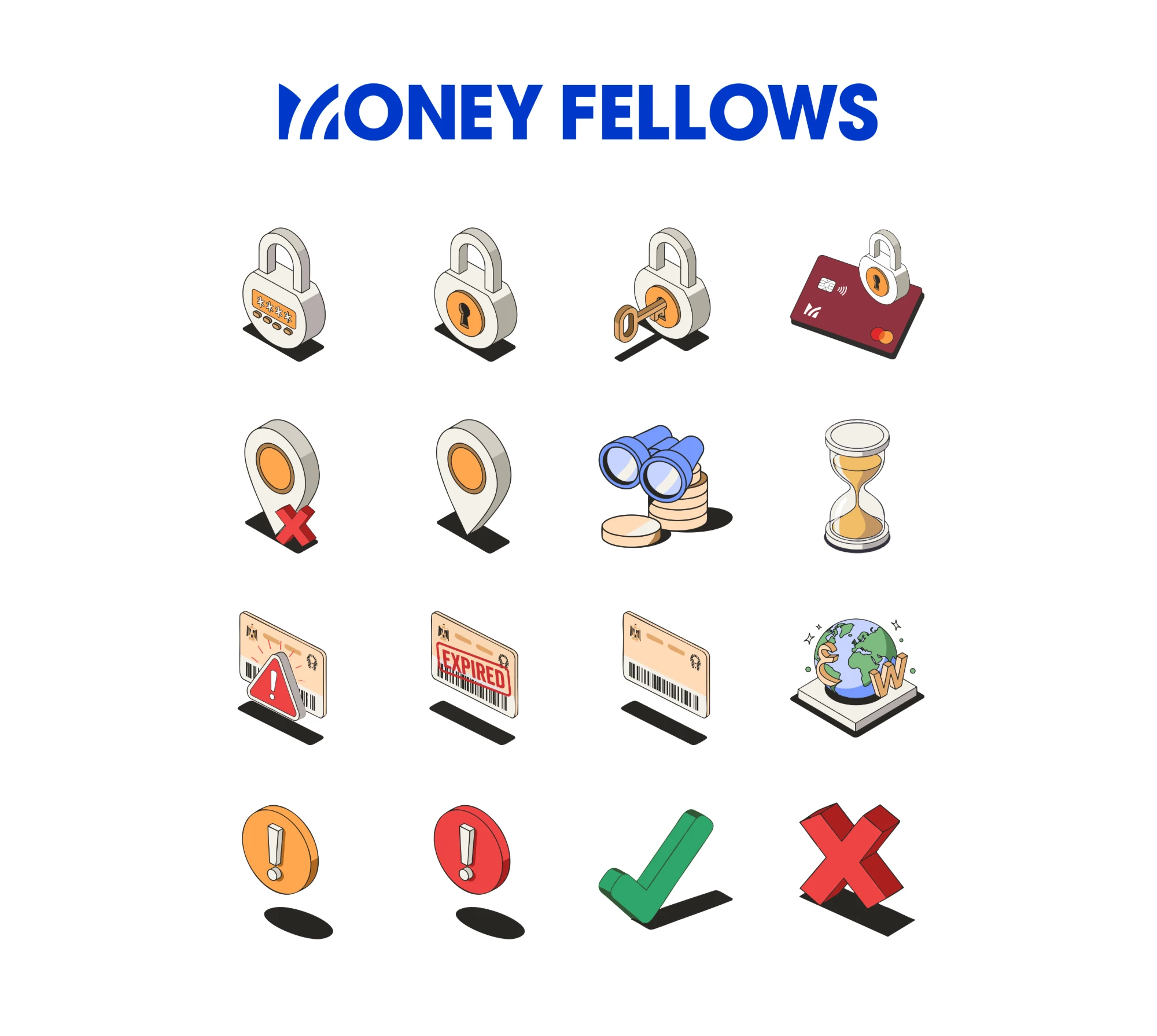
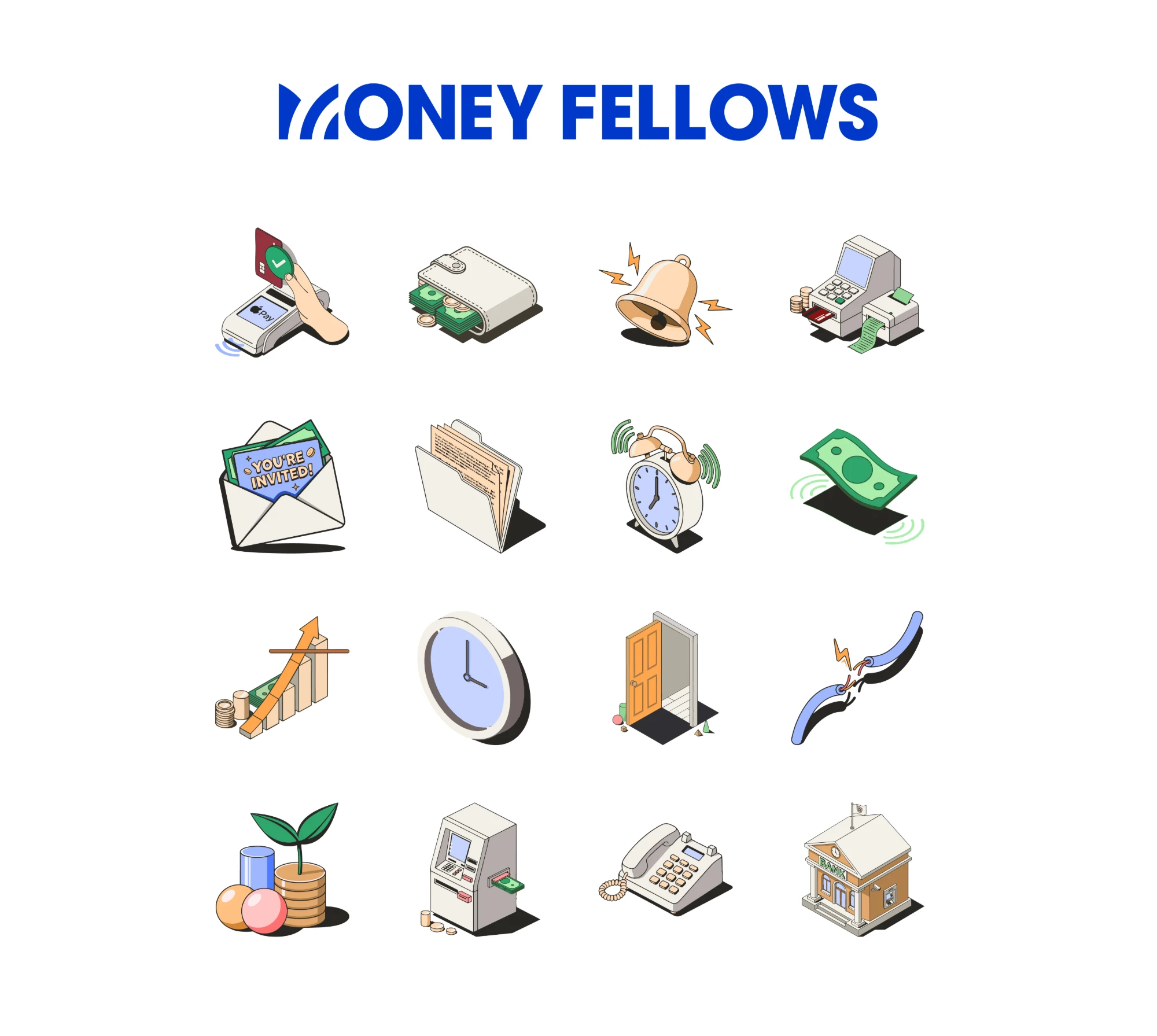
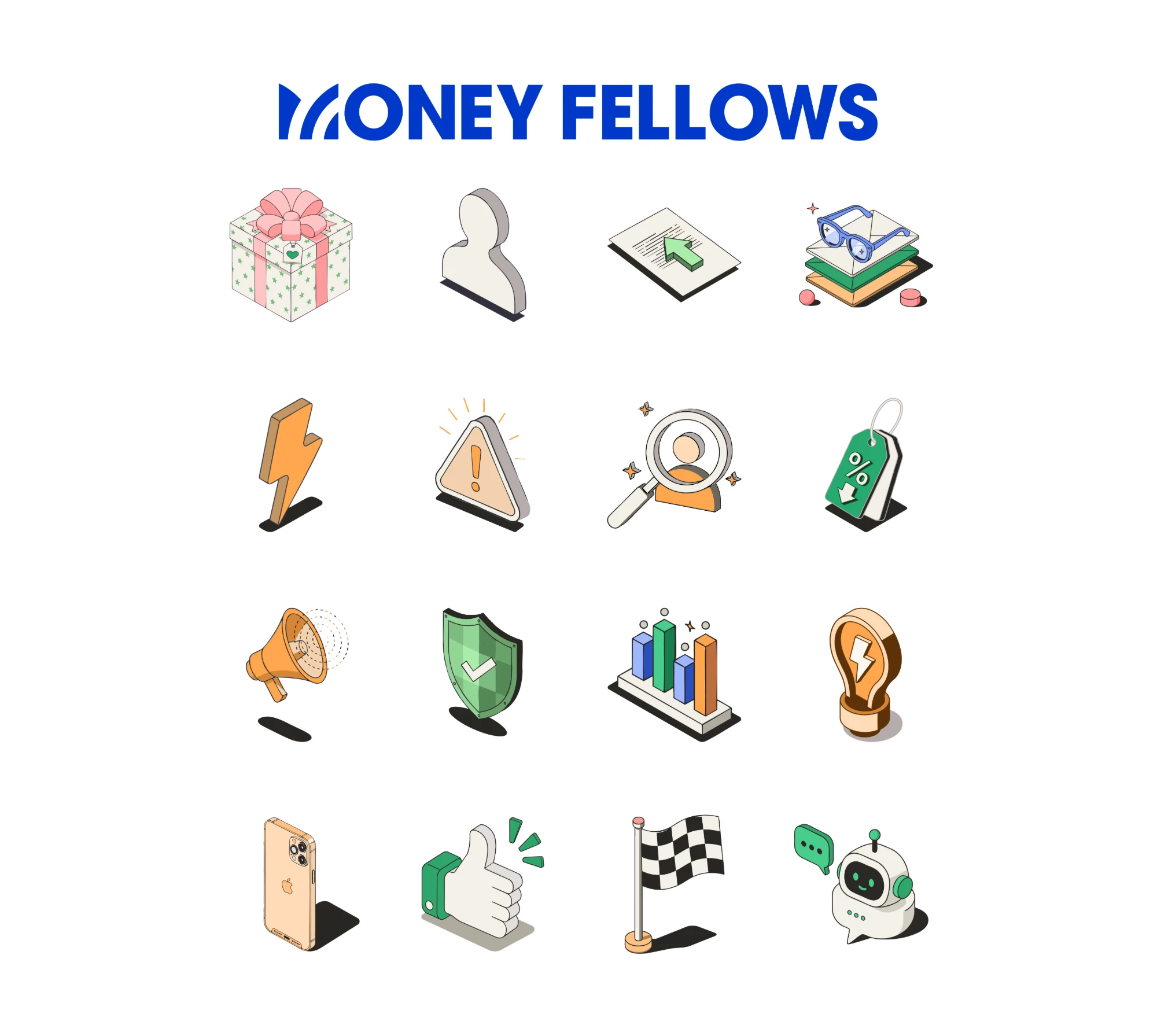
64 of the 80 illustrations, shown in the order they were produced.
05 · Art director's notes
06 · The result
An illustrations library of 80 consistent vectors, owned in-house. Around $5,000 stayed in the budget, and the pipeline is repeatable: a new need becomes a new illustration in the same style, with no new brief or invoice.
What I took away
The win wasn't the tool. It was treating AI as production capacity while keeping the taste, the spec and the final call with design.